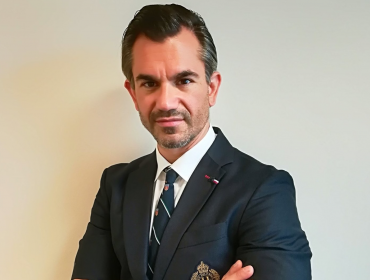
常用署名包括 Stergios-Aristoteles Mitoulis、Stergios Aristoteles Mitoulis、S. A. Mitoulis、Stergios Mitoulis;ORCID 为 0000-0001-7201-2703,ORCID 也列出 Google Scholar 与 Scopus Author ID 35311205700 作为追踪入口。S1S2
当前 UCL 官方档案列出的正式岗位是 The Bartlett School of Sustainable Construction 的 Associate Professor in Engineering and Project Management,档案标题使用 Prof;UCL 新闻称他于 2025 年 7 月加入 UCL。S1S3
UCL/ORCID 简介称他是 UCL Bartlett Centre for Global Infrastructure Resilience 的 Founding Director,同时是 MetaInfrastructure.org 与 bridgeUkraine.org 的 Director。S1S2
UCL 新闻称其前一岗位是 University of Birmingham 的 Professor of Structural and Infrastructure Engineering and Head of Structures,并曾领导 20 多名 academics 的 division、MSc in Structural Engineering 及 MetaInfrastructure/BridgeUkraine 等跨学科研究计划。S3
UCL Centre 页列出其在 Centre for Global Infrastructure Resilience 中的角色为 Leader, Founder,并给出的专长是 transport assets resilience、monitoring-driven infrastructure resilience、damage-free bridges、Eurocode compliance。S4
核心研究方向
总体定位:围绕 built environment 与 critical infrastructure 的 resilience、sustainability、digitalisation 展开,尤其关注桥梁与交通基础设施在自然灾害、气候变化、老化、冲突与系统级连锁扰动下的适应、恢复与长期可持续。S1S2S3
Argyroudis, Mitoulis 等, 2020, “Resilience assessment framework for critical infrastructure in a multi-hazard environment: Case study on transport assets”, Science of the Total Environment, DOI: 10.1016/j.scitotenv.2020.136854。该文把交通资产置于 multi-hazard 环境下进行关键基础设施韧性评估,是其从单桥抗震走向网络/系统韧性的代表节点。S5
Argyroudis and Mitoulis, 2021, “Vulnerability of bridges to individual and multiple hazards - floods and earthquakes”, Reliability Engineering & System Safety, DOI: 10.1016/j.ress.2021.107564。该文建立洪水、冲刷、漂浮物/水动力和地震组合作用下的桥梁 fragility models,并比较 integral bridges 与 bearing-supported bridges 在不同冲刷/地震情景下的差异。S6
Mitoulis, Argyroudis, Loli and Imam, 2021, “Restoration models for quantifying flood resilience of bridges”, Engineering Structures, DOI: 10.1016/j.engstruct.2021.112180。该文针对 flood-critical bridges 提出结构能力 restoration 与交通能力 reinstatement 恢复模型,覆盖冲刷、水动力和 debris accumulation 等水致损伤。S7
Kazantzi, Moutsianos, Bakalis and Mitoulis, 2024, “Cause-agnostic bridge damage state identification utilising machine learning”, Engineering Structures, DOI: 10.1016/j.engstruct.2024.118887。RISKADAPT 页面将其列为相关成果,主题是用有限监测/挠度数据和机器学习识别桥梁损伤状态。S12
Kopiika 等, 2025, “Rapid post-disaster infrastructure damage characterisation using remote sensing and deep learning technologies: A tiered approach”, Automation in Construction, DOI: 10.1016/j.autcon.2024.105955。该文以乌克兰 17 座受损桥梁为案例,整合 Sentinel-1 SAR、crowdsourced data、高分辨率图像与 deep learning 做多尺度损伤识别。S16
Kopiika, Di Bari, Argyroudis, Ninic and Mitoulis, 2025, “Sustainability and resilience-driven prioritisation for restoring critical infrastructure after major disasters and conflict”, Transportation Research Part D, DOI: 10.1016/j.trd.2025.104592。该文提出桥梁组合恢复优先级框架,把 resilience 与 sustainability 指标用于冲突影响区域的投资与恢复排序。S17
Forcellini and Mitoulis, 2025, “Effect of deterioration on critical infrastructure resilience - framework and application on bridges”, Results in Engineering, DOI: 10.1016/j.rineng.2024.103834。该文把老化/劣化引入桥梁韧性评估,讨论不同 deterioration 水平对 loss model、fragility、recovery process 和 seismic resilience 的影响。S18
Dulin, Mitoulis 等, 2025, “Rethinking infrastructure design from component failure to systemic resilience”, Nature Communications, DOI: 10.1038/s41467-025-64683-6。该文以 Francis Scott Key Bridge collapse 为案例,论证桥梁设计需要从构件风险阈值扩展到系统互依、区域经济和恢复能力。S10
Kopiika, Argyroudis, Ouyang and Mitoulis, 2026, “A new paradigm for resilient and equitable post-war recovery of cities”, Nature Cities, DOI: 10.1038/s44284-026-00424-0。该 comment 明确提出战后城市重建应超越政治/经济利益驱动,转向 science-driven、multidisciplinary、people/community-centred、social justice 与 sustainability。S14
Mitoulis and Argyroudis, 2026, “Editorial: How AI and digitalisation transform bridge engineering, from modelling and monitoring to reliability and resilience”, Proceedings of the ICE - Bridge Engineering, DOI: 10.1680/jbren.2026.179.2.109。这反映其作为桥梁工程期刊编辑方向的一条近期主线:AI 和 digitalisation 正在连接建模、监测、可靠度与韧性。S19
Centre for Global Infrastructure Resilience:UCL Bartlett 的 centre/virtual research centre,页面列出 Mitoulis 为 Leader, Founder,团队关注 resilience/sustainability、AI/advanced technologies、transport assets、monitoring-driven resilience、damage-free bridges 等。S4
MetaInfrastructure:其网站定位为通过 people-centric、sustainable、resilient design 交付 future built ecosystems,并列出 threat-agnostic resilience、AI & digital transformation、sustainable development、metaCity、Counterfactual Engineering 等专长方向。S13
ReCharged:MetaInfrastructure 页面列出 Dr Stergios Aristoteles Mitoulis 为 Scientific Coordinator;UKRI GtR EP/Y003586/1 页面显示其 UKRI Horizon Europe Guarantee award 题名为 “Climate-aware Resilience for Sustainable Critical and interdependent Infrastructure Systems enhanced by emerging Digital Technologies”,并关联 BridgeUkraine community of practice;完整 MSCA ReCharged 项目周期应以 CORDIS 101086413 为准。S22S23S26
RISKADAPT:项目题名为 “Asset-level modelling of risks in the face of climate-induced extreme events and adaptation”;CORDIS 101093939 显示该项目总成本为 €2,534,786.25、EU contribution 为 €2,533,536.00,由 RISA Sicherheitsanalysen GmbH 协调;MetaInfrastructure/RISKADAPT 页面称其为 18 机构项目,目标是面向气候诱发 compound events 的 asset-level risk-informed adaptation platform。S24S27
2025 年 7 月加入 UCL;2026 年 3 月 UCL Spotlight 中,他称当前最优先的工作是支持 Ukraine recovery,并称自己目前 lead and contribute to 13 active research projects funded by Horizon Europe, UKRI and charitable foundations。S3
2025 年 Nature Communications 论文用 Francis Scott Key Bridge collapse 讨论桥梁/港口关闭的 cascading economic impacts,并提出 resilience-based bridge analysis procedure。S10